mBot Robotics
CODE & COMPETE
Coding • Sensors • Problem Solving • Robot Football
AI & ROBOTICS
Step inside the world of artificial intelligence and robotics.
Explore how machines see, navigate, understand instructions and interact with the physical world through hands-on technology and live demonstrations.
AI • COMPUTER VISION • LiDAR • CODING • AUTONOMOUS SYSTEMS • ROBOTICS
SEE IT→UNDERSTAND IT→INTERACT WITH IT→CONTROL IT→CREATE IT
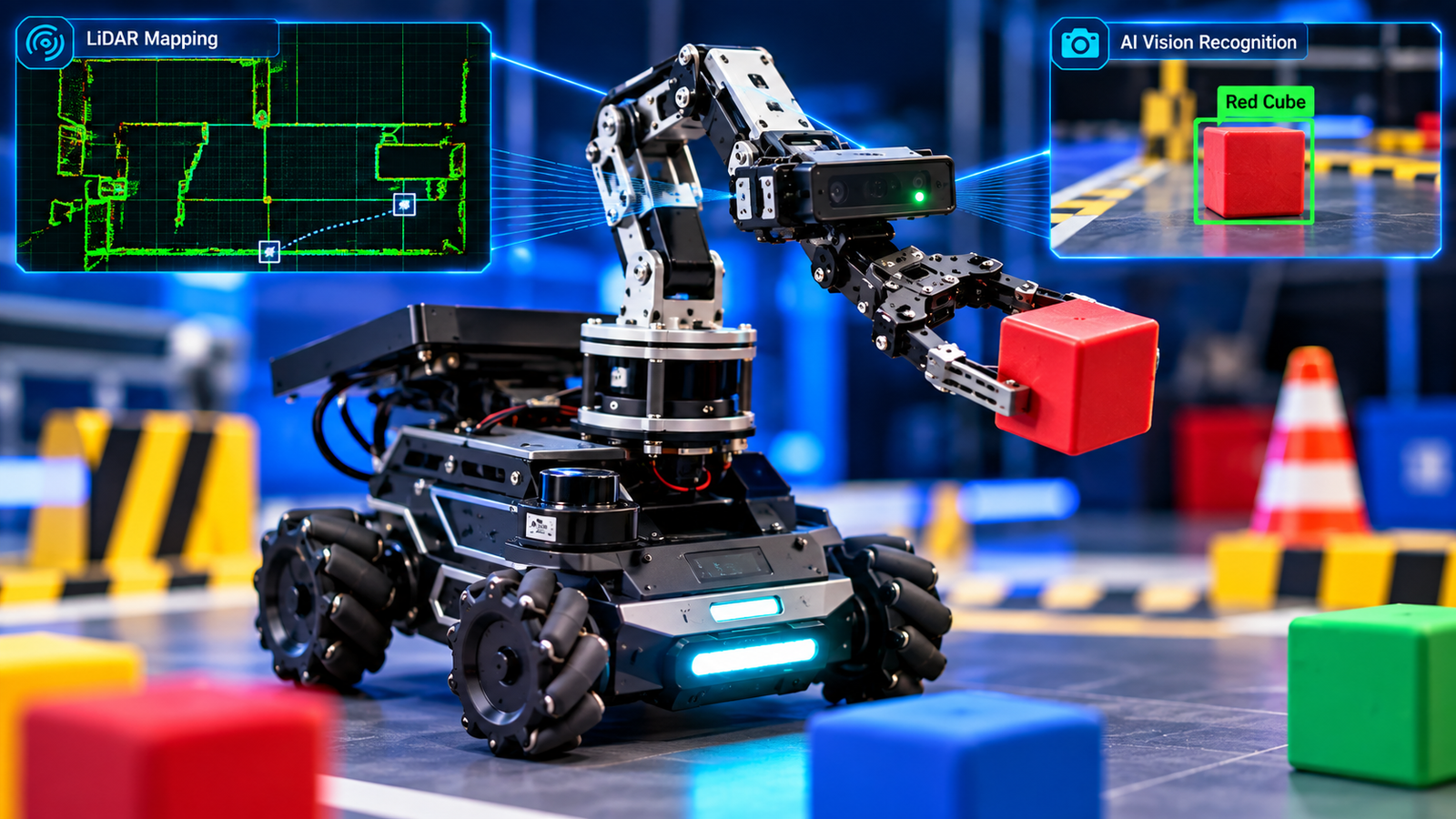
ROSMASTER M3 Pro
What happens when you give a robot a mission?
ROSMASTER combines AI, computer vision, LiDAR mapping, autonomous navigation and robotic manipulation to turn an instruction into physical action. Learners can explore how a robot maps its environment, identifies objects, makes decisions, navigates and uses its robotic arm to complete a task.
Embodied AI
AI THAT CAN SEE, UNDERSTAND AND INTERACT
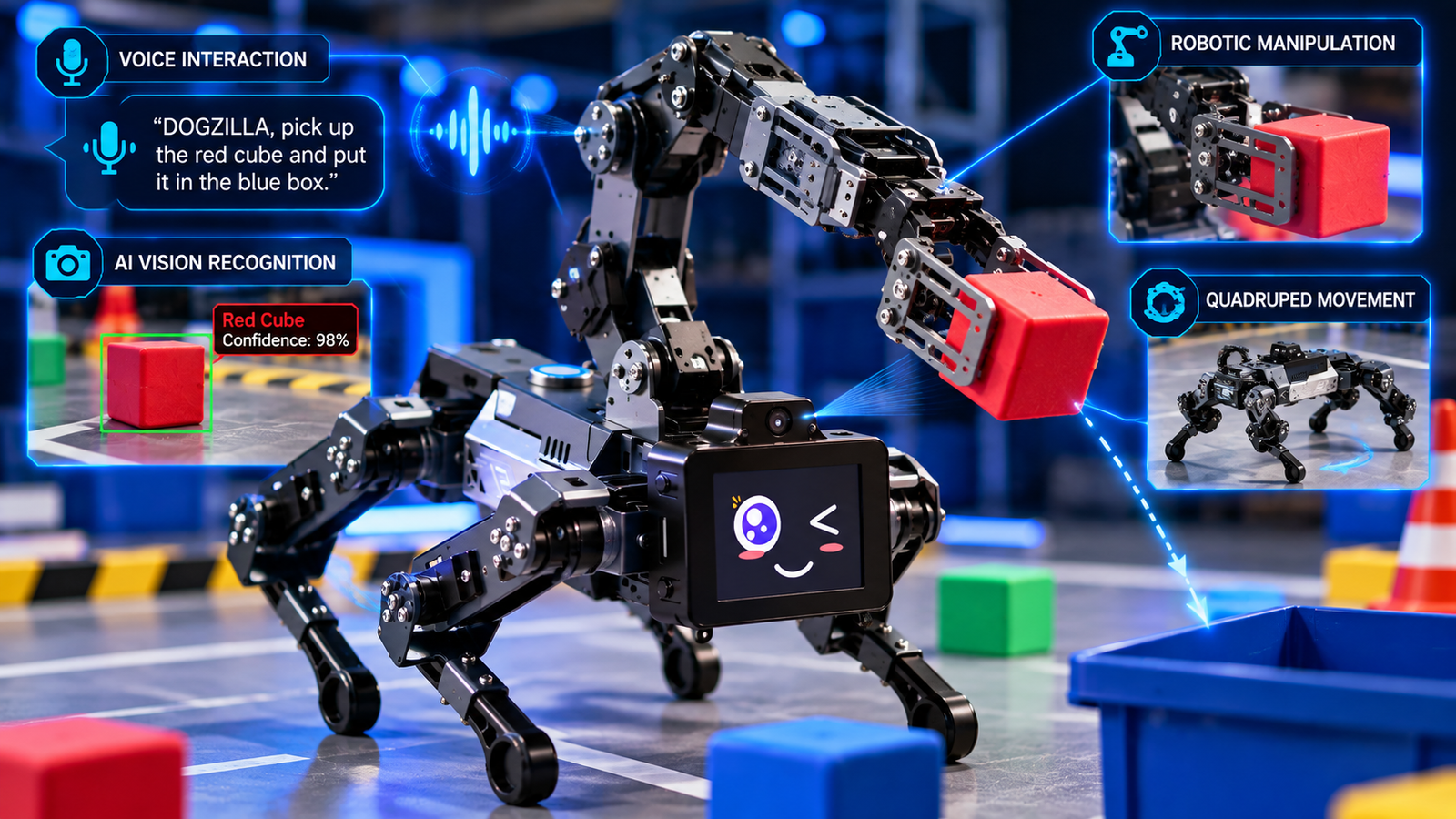
DOGZILLA brings artificial intelligence to life through movement, vision and interaction.
Its quadruped platform and robotic arm demonstrate how AI can recognise objects, respond to instructions, move through its environment and physically interact with the world around it.
Space exploration through STEM
FROM THE CLASSROOM TO ANOTHER WORLD
What would it take to explore another planet?
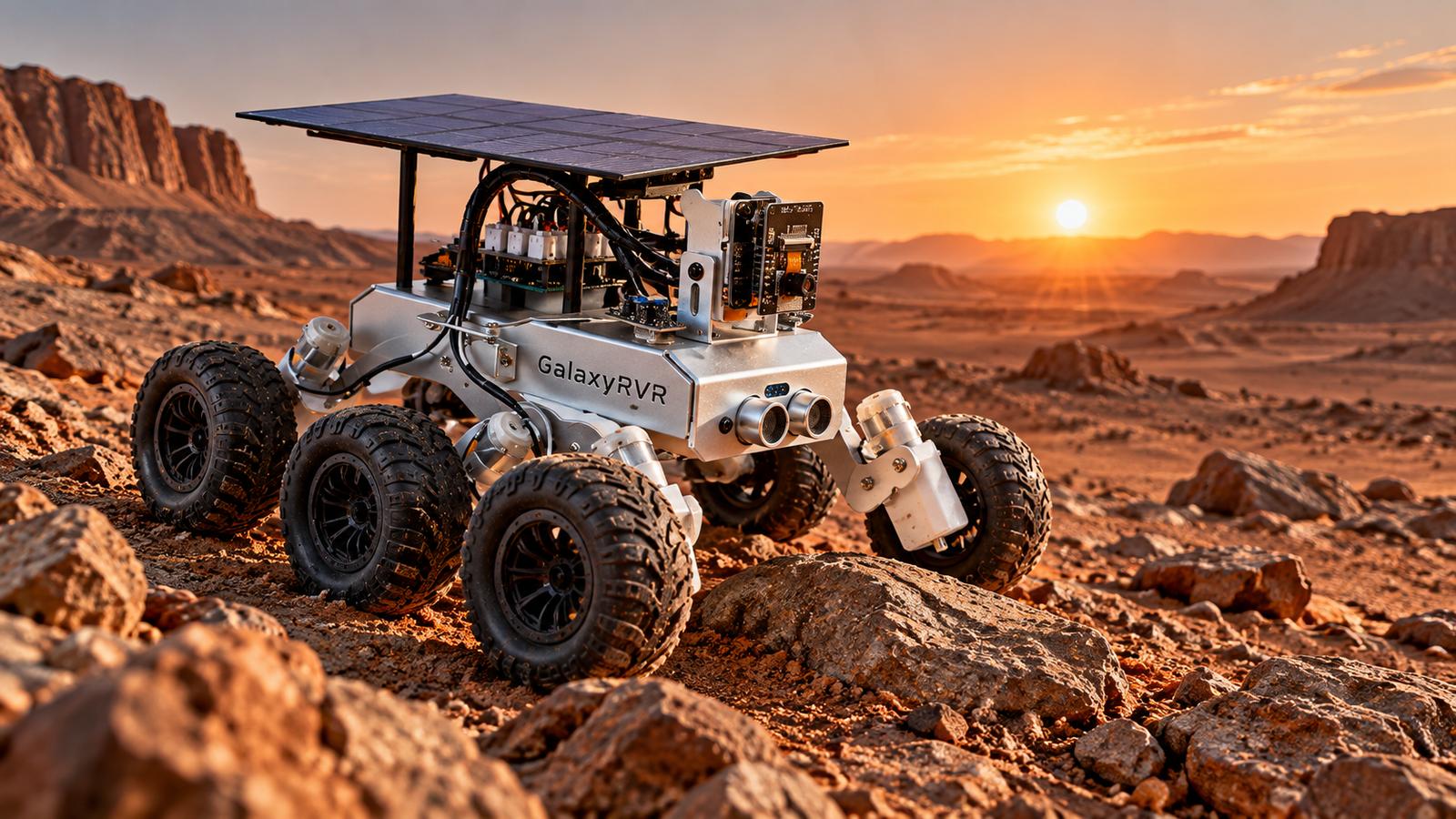
GalaxyRVR gives learners a hands-on introduction to the technologies and engineering challenges behind robotic exploration.
Through coding, cameras, sensors, remote control and six-wheel mobility, students can investigate how a robotic rover can observe its surroundings, respond to obstacles and navigate challenging terrain.
MISSION: EXPLORE
CODE • SENSE • NAVIGATE • DISCOVER
Educational context only — GalaxyRVR is a classroom robotics platform inspired by planetary exploration, not a space-qualified rover.
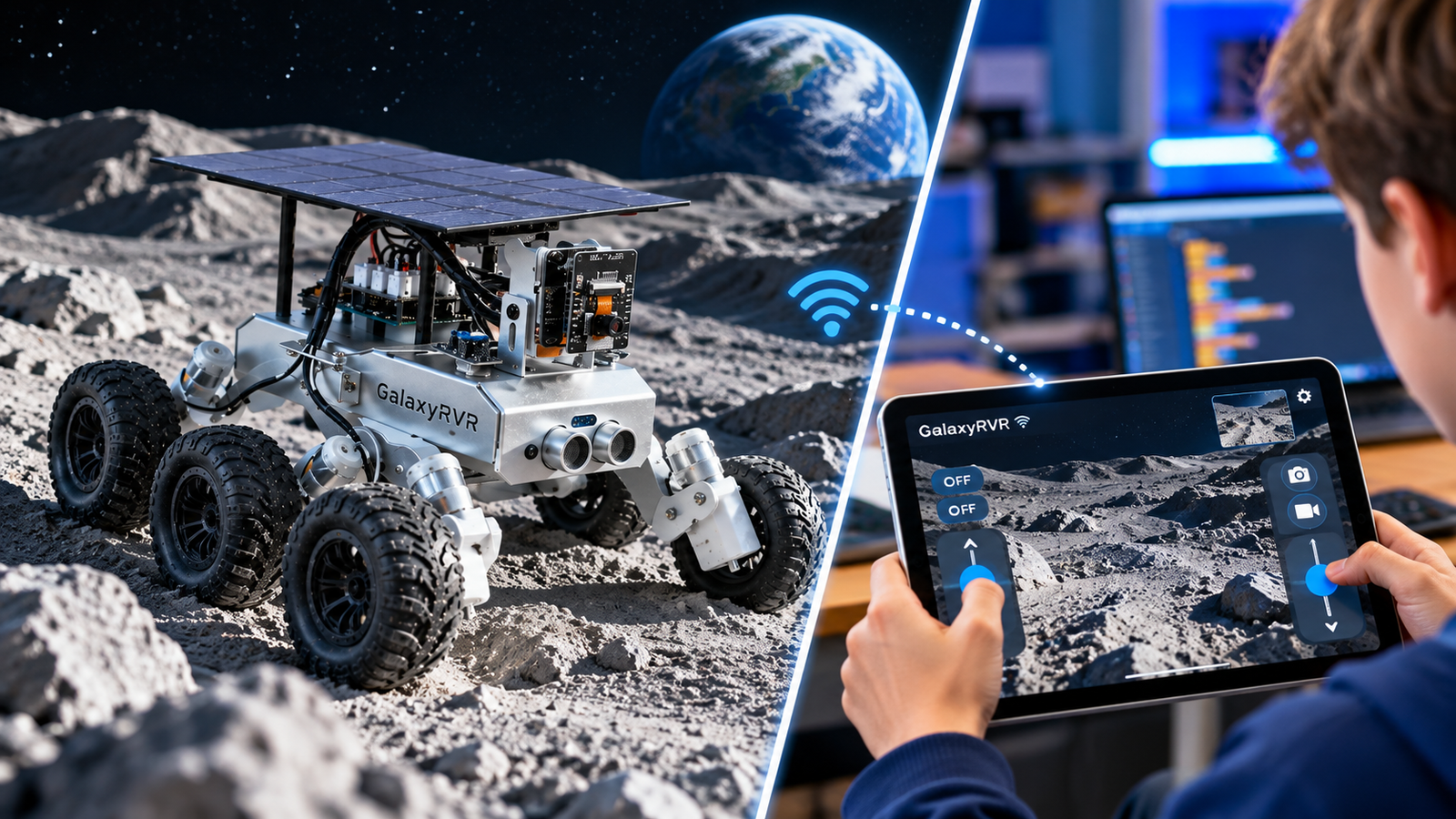
Operator & rover
Planetary exploration depends on much more than the rover itself.
Operators need cameras, sensors, communications and software to understand what the robot can see and decide where it should go next.
GalaxyRVR lets learners experience that relationship between robot and operator by viewing the rover's environment and controlling its movement remotely.
The technology
Genuine GalaxyRVR capabilities learners can explore hands-on — sensors, code, mobility and power working as one system.
See the environment from the rover's perspective.
Detect obstacles and measure distance.
Explore uneven and challenging terrain.
Progress into text-based programming.
Introduce programming through accessible block-based coding.
Experience rover operation from the driver's perspective.
Explore how renewable energy can support mobile technology.
Space provides an exciting real-world context for exploring science, technology, engineering and mathematics.
A planetary rover brings multiple STEM disciplines together in one challenge:
How do we build a machine that can sense its surroundings, communicate, navigate difficult terrain and complete a mission far from its operator?
SCIENCE
Planetary environments, forces, energy and investigation
COMPUTING
Programming, data and remote control
ENGINEERING
Mechanisms, electronics, sensors and problem solving
MATHEMATICS
Measurement, distance, movement and navigation
SUSTAINABILITY
Energy generation, solar power and efficient systems
The mission
An example STEM activity sequence — problem solving and engineering thinking, not just remote control.
01
STEP 01
Study the exploration area and decide your route.
02
STEP 02
Create instructions for the rover.
03
STEP 03
Navigate the rover through challenging terrain.
04
STEP 04
Use its camera and sensors to gather information.
05
STEP 05
Respond to obstacles and unexpected conditions.
06
STEP 06
Reach the destination and evaluate your solution.
Behind every rover is a team of people who design, program, test, operate and analyse the mission.
GalaxyRVR turns the excitement of space exploration into a practical STEM experience — connecting coding, robotics, engineering, renewable energy and problem solving through a technology young people can see, control and understand.
More pathways
mBot Robotics
Coding • Sensors • Problem Solving • Robot Football
VEX Robotics
Mechanical Engineering • Coding • Iteration • Teamwork
Hands-on programmable robotics
LEARN ROBOTICS FROM THE BOTTOM UP
Long before robots could recognise objects, map their surroundings or understand spoken instructions, we had to tell them exactly what to do.
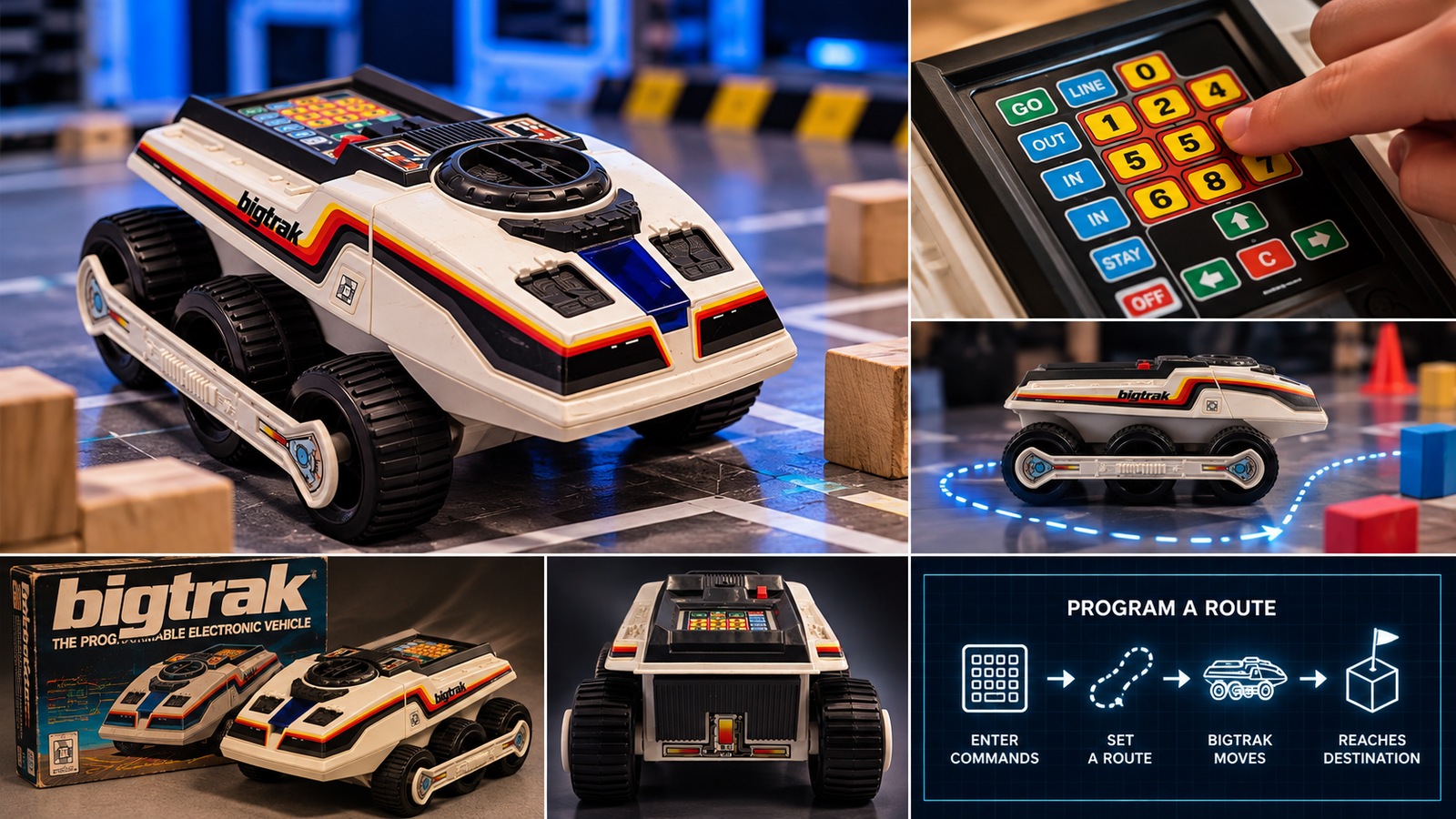
BigTRAK brings that fundamental idea back to life.
Visitors don't just look at it. They programme it.
Using its onboard keypad, learners create a sequence of movement commands, send BigTRAK on a mission and discover whether their instructions actually take it where they intended.
The learning loop
01
PROGRAM
Enter a sequence of instructions.
02
PREDICT
Work out where you think BigTRAK will go.
03
RUN
Let the robot execute the programme.
04
OBSERVE
Did it do what you expected?
05
DEBUG
Identify where your instructions went wrong.
06
TRY AGAIN
Change the programme and improve the result.
NO SCREEN REQUIRED.JUST LOGIC, SEQUENCING AND PROBLEM SOLVING.
Create a BigTRAK mission
It sounds simple — until you have to work out the distances, turns and sequence yourself.
That's where the learning begins.
Why start with BigTRAK?
Modern robots can contain cameras, sensors, powerful computers and artificial intelligence.
BigTRAK removes that complexity.
There is no AI making the decisions for you. The learner provides the instructions.
That makes cause and effect immediately visible and introduces fundamental computing concepts through a physical machine.
SEQUENCING
Instructions happen in an order.
LOGIC
The robot only knows what you tell it.
MEASUREMENT
Distance and movement need to be considered.
DEBUGGING
If the mission fails, change the instructions and try again.
The technology has changed dramatically.
The fundamental idea hasn't.
For more than 40 years, educational robotics has helped people explore the same fascinating challenge:
HOW DO WE TELL A MACHINE WHAT WE WANT IT TO DO?
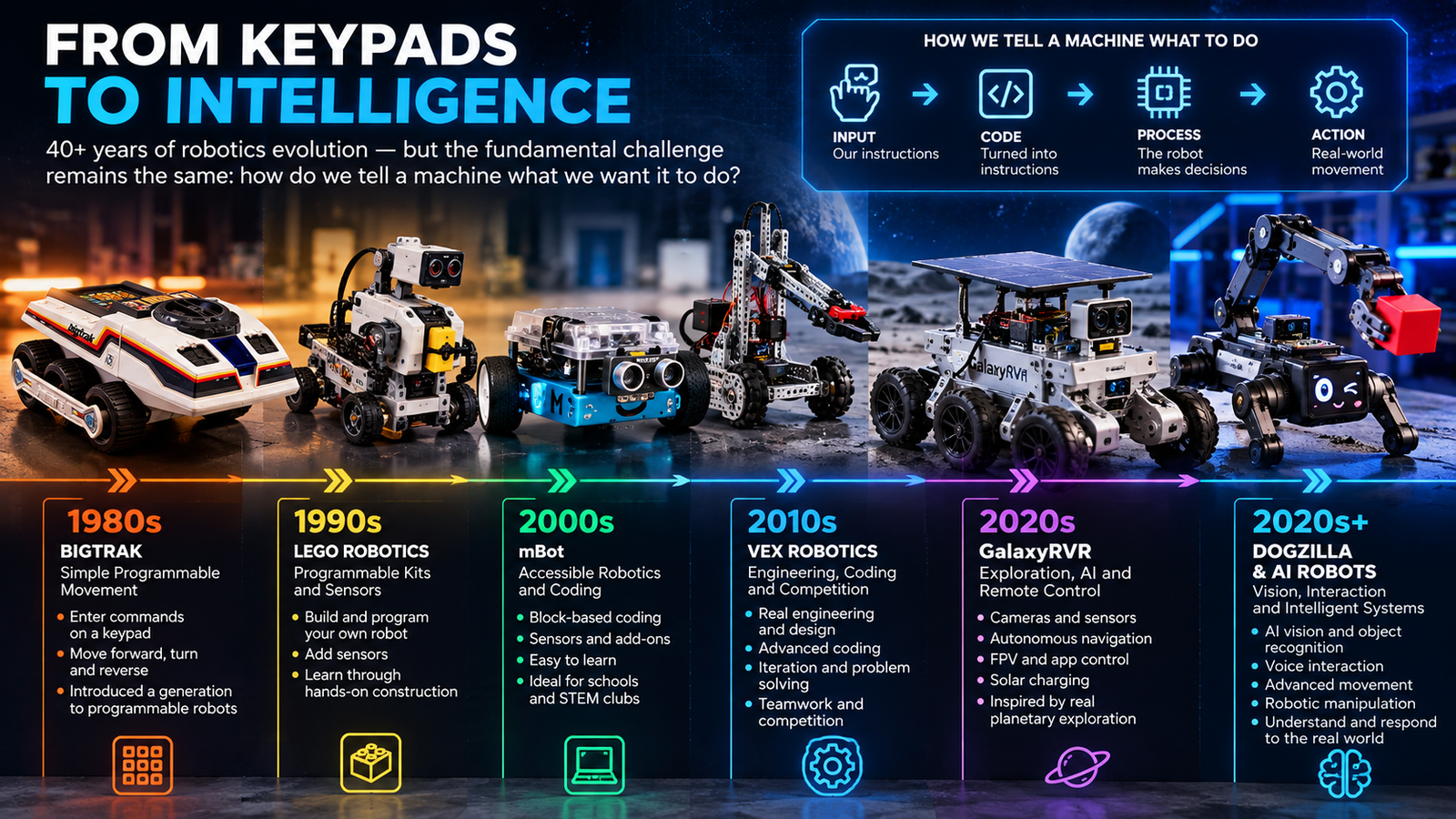
1980s PROGRAMMABLE ROBOTICS↓CODING↓SENSORS↓ENGINEERING↓AUTONOMOUS ROBOTICS↓ARTIFICIAL INTELLIGENCE
Then
Now
BigTRAK follows the instructions you give it.
Today's advanced robots can also use sensors, computer vision and AI to interpret their environment, make decisions and adapt their actions.
Understanding the first makes the second much easier to understand.
BIGTRAK
Programme a sequence.
mBOT
Learn coding and sensors.
VEX
Design, engineer and iterate.
GALAXYRVR
Explore sensing, remote control and robotic exploration.
ROSMASTER
Discover autonomous navigation, computer vision and robotic manipulation.
DOGZILLA
Explore AI, vision, interaction, movement and physical manipulation.
FROM YOUR FIRST COMMAND...
TO A ROBOT THAT CAN SEE, THINK AND ACT.
STEMBus lets learners explore the evolution of robotics for themselves — not simply by looking at the technology, but by programming, controlling, experimenting and discovering how it works.
EXPLORE ROBOTICS WITH STEMBUSSENSORS → DATA → CODE → DECISIONS → ACTION
01
What is happening around me?
02
ESP32 and Raspberry Pi process information.
03
Software determines what the robot should do.
04
Digital decisions become physical movement.
Robotics is a combination of electronics, engineering, computing and software — not simply a finished machine.
SOMEONE DESIGNED IT.
SOMEONE PROGRAMMED IT.
SOMEONE ENGINEERED IT.
SOMEONE DEVELOPED THE AI.
SOMEONE CREATED THE VISION SYSTEM.
COULD THAT SOMEBODY BE YOU?
THE FUTURE IS BUILT BY CURIOUS MINDS TODAY.
STEMBus AI & Robotics experiences can be adapted for schools, colleges, universities, science festivals, community events and public engagement programmes.
Hands-on workshops and STEM enrichment
Public engagement, outreach and widening participation
Live demonstrations and interactive Discovery Zones
Accessible, hands-on technology experiences